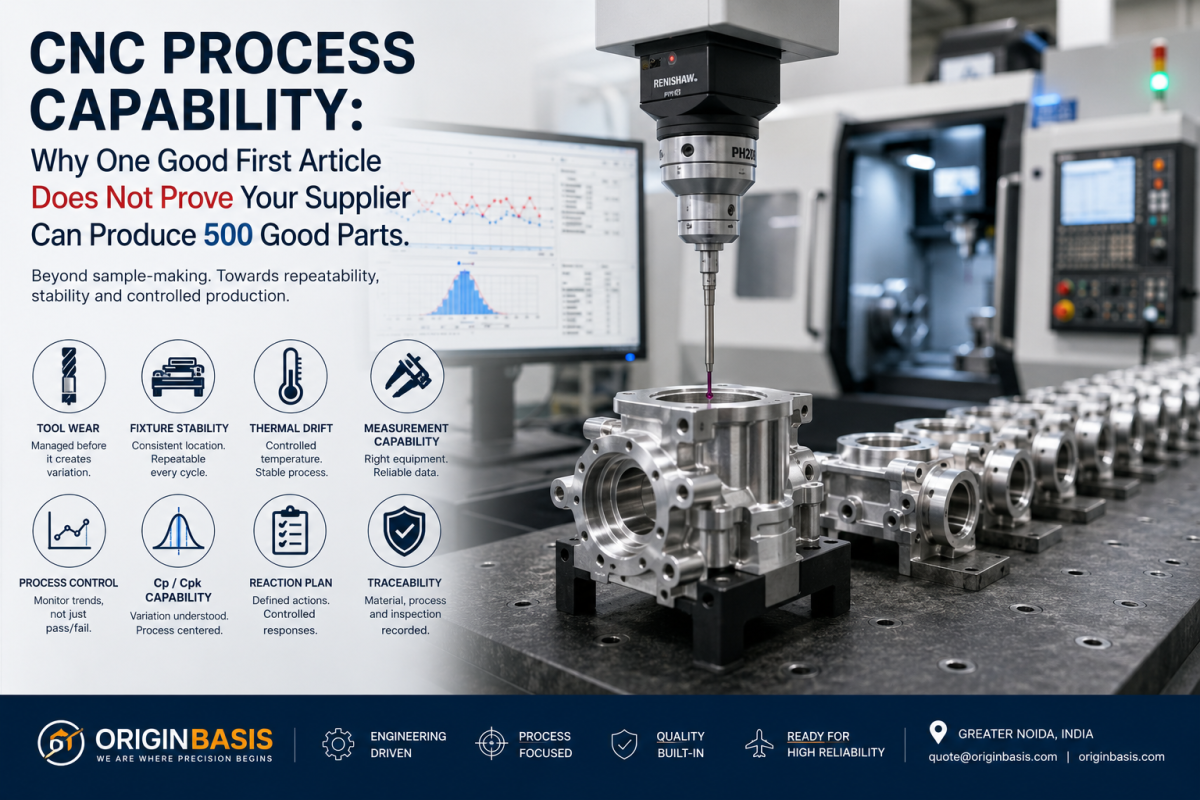
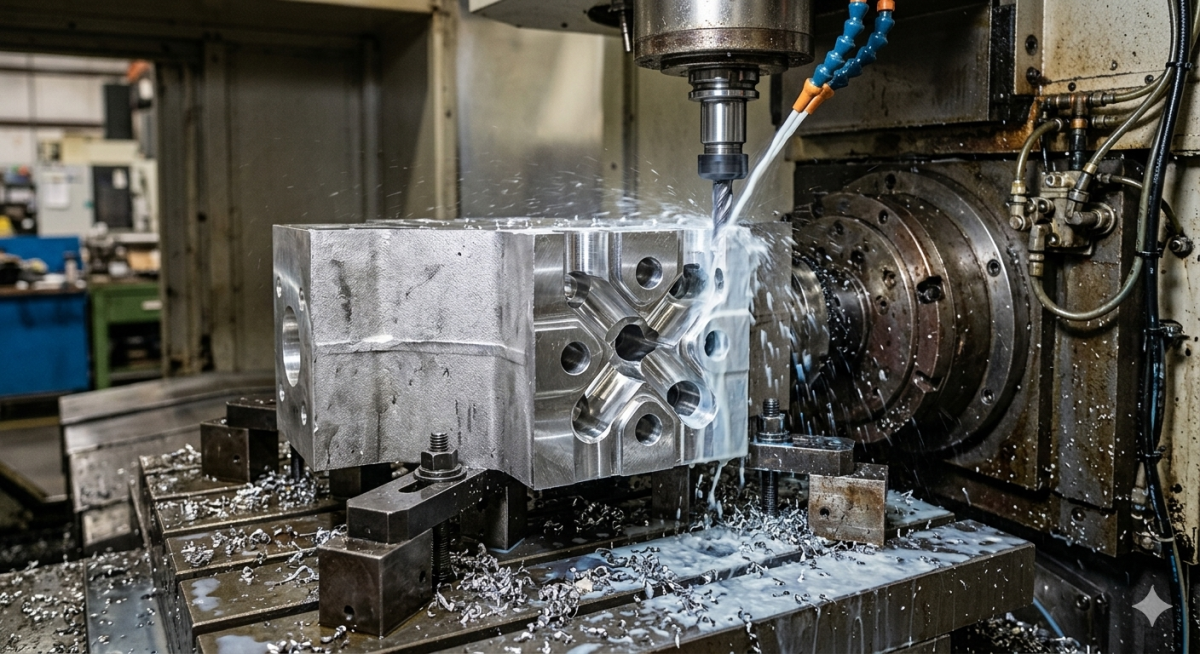
What Drone Manufacturers Should Look for in a CNC Machining Partner — Lessons from Satellite Enclosure Work
A transparent note before we begin.
ORIGINBASIS is establishing a new precision CNC facility in Greater Noida, NCR. I am founding it after 15+ years of aerospace machining experience across Canada and India — work that included thin wall aluminum enclosure panels for space programs. We have not yet machined drone frames as a commercial order. What I have done is spend over a decade solving the dimensional and process challenges that drone hardware demands — just in a different application.
This post is written from that experience. Not from a sales pitch.
Why Drone Procurement Teams Keep Getting Burned
There is a pattern that repeats itself across manufacturing programs in India.
A drone OEM sources a machining vendor. The vendor quotes competitively, delivers samples that pass inspection, and gets approved. Production begins. Then the problems start — wall thickness variation between batches, flatness failures on housing components, mounting interface dimensions that are off by just enough to cause assembly headaches. The vendor blames material. The program team blames the vendor. Both are partly right and completely missing the real issue.
The real issue is that the vendor was qualified on their ability to produce a sample — not on their ability to produce a process.
These are completely different things. A sample can be nursed through with extra attention, manual measurement at every step, and operator instinct. A process is what happens when that same part needs to come out right on unit 47 of a 200-piece batch, on a Monday morning, without the senior machinist standing next to the machine.
What Drone Hardware Actually Demands From a Machining Vendor
Drone structural and housing components share more DNA with aerospace hardware than most procurement teams realise.
Motor mount interfaces need to be positioned accurately enough that rotor balance is not compromised at operating RPM. Frame arms need flatness and straightness that survive assembly torque without induced stress. Battery enclosures need wall consistency that supports thermal management predictions made by the design team. RF and electronics housings need dimensional stability that holds across temperature cycling — because a connector interface that is marginal at room temperature will fail in the field.
None of this requires exotic tolerances on every feature. But it does require a vendor who understands which features are critical, has a process for holding them reliably, and can prove it with documentation rather than just with a good-looking sample.
That combination — process understanding, reliable execution, documented proof — is what is genuinely scarce in the Indian CNC machining market right now.
The Qualification Questions Most Teams Never Ask
When I look at how drone manufacturers typically qualify machining vendors, the process is almost always too shallow. Here are the questions that actually separate capable vendors from ones who will cause you problems at scale.
Ask them to walk you through how they fixture a thin wall part.
Not "do you have experience with thin wall" — that question gets a yes from every shop. Ask them to describe their fixturing approach for a housing with 1mm walls. A vendor who understands the problem will talk about clamping force distribution, support under the part, how they validate that the fixture itself is not distorting the workpiece. A vendor who does not understand it will describe how they hold the part down and machine it carefully.
Careful is not a process. It is a hope.
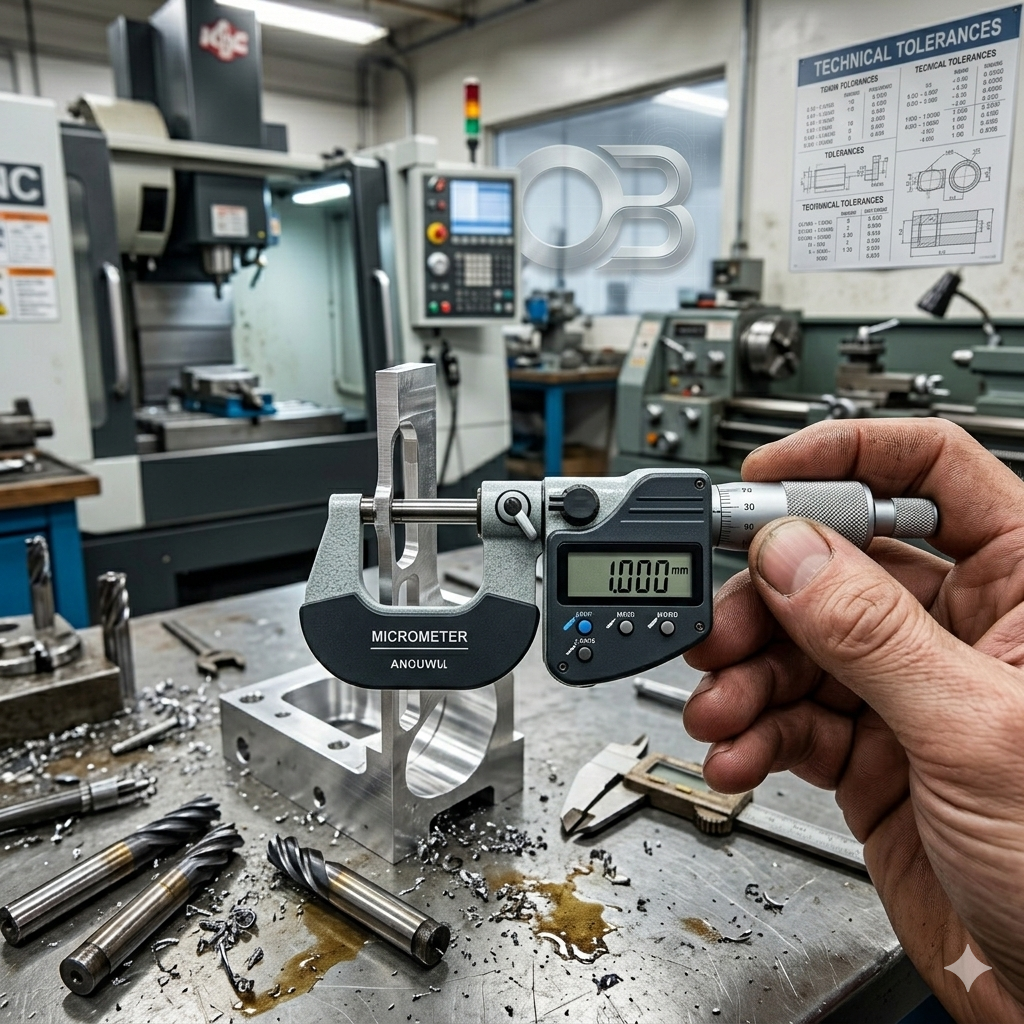
Ask for a sample first article report on a previous job.
A first article report is a document that maps every critical dimension on a drawing to a measured value, with the measurement method and tool recorded. It is the baseline document of aerospace supply chain quality. If your vendor cannot show you one from a previous job, their quality system is informal — which means your production parts are being inspected by whoever has time, using whatever method feels right that day.
Ask where the material comes from and how they trace it.
For flight-relevant or safety-relevant drone components, the aluminum going into your parts should be traceable to a mill certificate confirming composition and temper. This is not bureaucracy — it is the difference between knowing your 7075-T6 is actually 7075-T6 and assuming it is because the supplier said so. Counterfeit and mislabelled aluminum exists in the Indian market. A vendor with no traceability process is a vendor who cannot tell you what is actually in your parts.
Ask about their scrap rate on tight tolerance aluminum.
An honest vendor will give you a number and explain how they manage it. A vendor who claims near-zero scrap on complex thin wall work is telling you something that does not match how physics works. Tight tolerance aluminum machining has inherent process risk. The question is not whether scrap happens — it is whether the vendor has a process for catching it before it ships.
Why Space Program Experience Transfers Directly
The satellite enclosure work I have done over my career is, in most respects, the hardest version of the problems drone hardware presents.
The wall sections are thinner. The flatness requirements are tighter. The documentation trail is more demanding. The production volumes are low enough that there is no statistical hiding place — every part has to be right on its own merits.
A machinist who has worked inside those constraints has developed instincts and process habits that do not switch off when the application changes. The fixturing discipline that keeps a 0.6mm satellite panel flat is the same discipline that keeps a drone motor housing interface in position. The material qualification habits that catch a bad 7075 billet before it becomes a scrapped enclosure are the same habits that protect a drone program from a material-driven field failure.
The application changes. The underlying engineering does not.
What ORIGINBASIS Plans to Offer Drone Programs
We are a new facility. I want to be direct about what that means and what it does not mean.
It means we do not yet have a warehouse full of delivered drone components. We are preparing the systems, process controls, and inspection approach that future customer work will require, informed by the aerospace components I have machined over the past 12 years.
What it does not mean is that we are learning on your parts. The process knowledge, the fixturing approach, the documentation discipline — that comes from over a decade of aerospace machining. It is already here.
For drone manufacturers, our planned service scope includes:
Planned first-article and prototype machining for aluminum housings, enclosures, frames, and structural components, with inspection documentation agreed during technical review.
3-axis CNC milling for housings, plates, and structural components.
4-axis machining for components that benefit from indexed access and fewer setups.
Material-traceability requirements are planned for each applicable job, with mill certificates linked to the agreed job documentation.
Tolerance requirements will be reviewed before quotation, and features requiring special controls will be discussed during technical review.
If you are a drone manufacturer or UAV program looking for a machining partner who will treat your components with aerospace-level process discipline — we are worth a conversation.
A Final Note on the Indian Machining Market
India has excellent machinists. The skills exist. What is genuinely scarce is the combination of machining skill, process documentation, and quality discipline in a single facility at the scale that growing drone programs need.
That gap is closing. ORIGINBASIS is establishing a facility intended to help close it — in Greater Noida, for aerospace , defense, and high-technology programs that need more than a competitive quote.
ORIGINBASIS is establishing a new precision CNC contract manufacturing facility in Greater Noida, NCR, founded by a machinist with 15+ years of aerospace manufacturing experience across Canada and India. Currently accepting RFQ for April 2027 work. Building toward AS9100 certification.
Enquiries: Quote@originbasis.com | originbasis.com