Machining Leak-Free Manifold Channels in 6061 Aluminum for Liquid-Cooled Servers
The rapid expansion of AI and high-density data centers has pushed traditional air-cooling to its limits. Today, liquid-cooled server infrastructure is the gold standard for thermal management. At the heart of these advanced cooling systems is the fluid manifold—a critical component where precision is non-negotiable. Even a microscopic defect in a manifold channel can lead to catastrophic leaks, destroying hundreds of thousands of dollars worth of computing hardware.
At Origin Basis, we understand that manufacturing these components requires strict adherence to tight tolerances, superior surface finishes, and advanced CNC machining strategies. Here is a look at how we approach machining leak-free manifold channels in 6061-T6 aluminum.
Why 6061 Aluminum for Liquid Cooling? We primarily utilize 6061-T6 aluminum for these applications due to its optimal balance of properties. It offers excellent thermal conductivity, exceptional machinability, and high structural integrity. Furthermore, 6061 accepts hard-coat anodizing exceptionally well, which provides the necessary corrosion resistance against the glycol-water mixtures commonly used in server cooling loops.
Overcoming the Core Machining Challenges
1. Achieving Critical Surface Finishes for O-Ring Seals The mating surfaces and the floors of the coolant channels must maintain exceptional surface finishes (often Ra 16 µin or better) to ensure O-rings and custom gaskets seal perfectly.
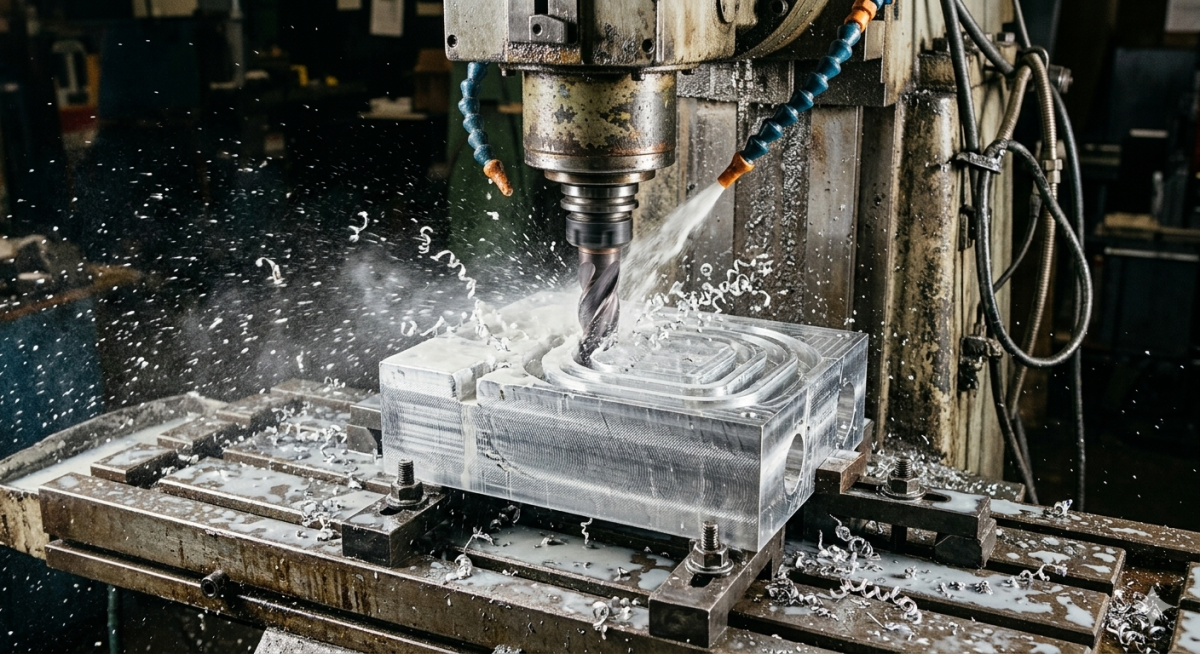
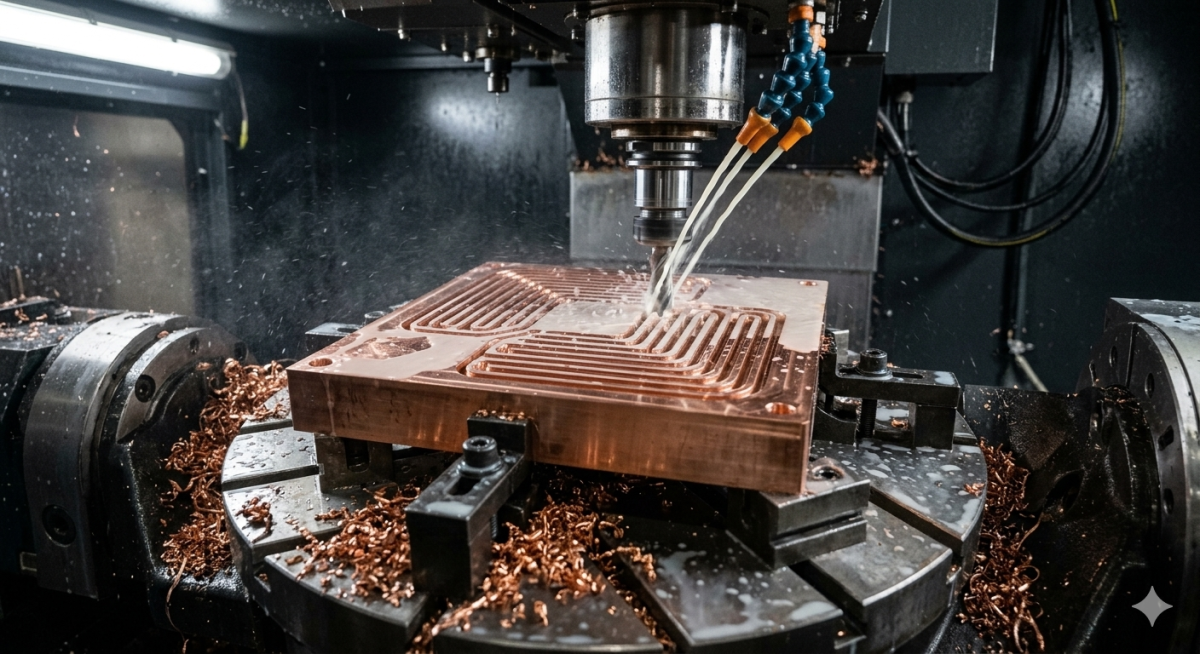
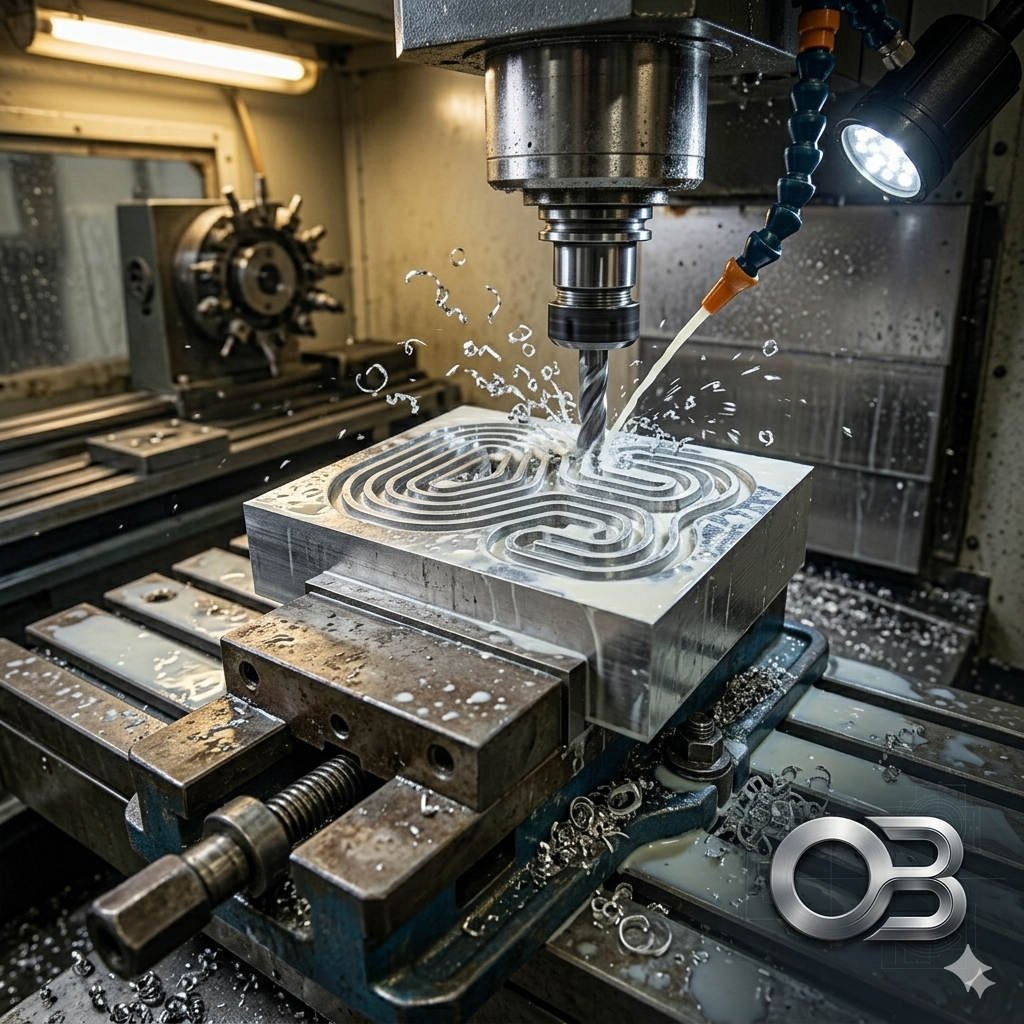
- Our Approach: We utilize high-performance, polished-flute solid carbide end mills specifically geometry-optimized for aluminum. By calculating precise chip loads and utilizing high-pressure, through-spindle coolant, we evacuate metal chips instantly. This prevents chip recutting, which is the primary cause of surface scoring and micro-scratches that compromise seals.
2. Managing Material Stress and Warpage Manifolds often start as thick aluminum billets and undergo heavy material removal. 6061-T6 contains internal stresses that release during machining, causing the plate to warp. If a manifold warps, the mating plates will not sit flat, guaranteeing a leak.
- Our Approach: We employ a strategic roughing and finishing methodology. We rough out the channels and critical profiles, leaving a small amount of stock. The part is then allowed to rest, or the workholding tension is released and re-applied at much lower clamping pressures before the final high-speed finishing passes. This ensures the final contact surfaces remain perfectly flat.
3. Flawless Edge Breaking and Burr Removal In fluid dynamics, burrs are a nightmare. A rogue burr can detach and clog micro-channel cold plates downstream, or prevent a gasket from seating correctly.
- Our Approach: Hand deburring is too inconsistent for high-stakes server infrastructure. We program specialized chamfering and edge-breaking toolpaths directly into our CAM software. Every edge and channel intersection is precisely radiused or chamfered by the CNC machine, ensuring a uniform, burr-free fluid path.
Validating the Process Machining the part is only half the battle; validating its integrity is the rest. Our quality control focuses on strict surface roughness profiling and hydrostatic pressure testing to guarantee that when an Origin Basis manifold goes into a data center rack, it operates flawlessly under pressure.
Precision manufacturing isn't just about cutting metal; it's about engineering reliability into every channel. ***