CNC Machining Liquid Cooling Channels for Data Center Cold Plates: Tolerances, Leakage Risks, and Surface Finish
As server racks push past 100kW to support intensive AI and machine learning workloads, traditional air cooling is no longer viable. Direct-to-chip liquid cooling has become the industry standard, relying heavily on meticulously engineered cold plates.
For engineers and procurement managers sourcing these components, the stakes are incredibly high. A cold plate is positioned directly above high-value, heat-generating silicon (CPUs and GPUs). Any manufacturing defect—whether dimensional inaccuracy or a subpar surface finish—can lead to catastrophic hardware failure.
Here is a deep dive into what actually matters when CNC machining liquid cooling channels for data center cold plates.
1. Tolerances: The Margin Between Function and Failure
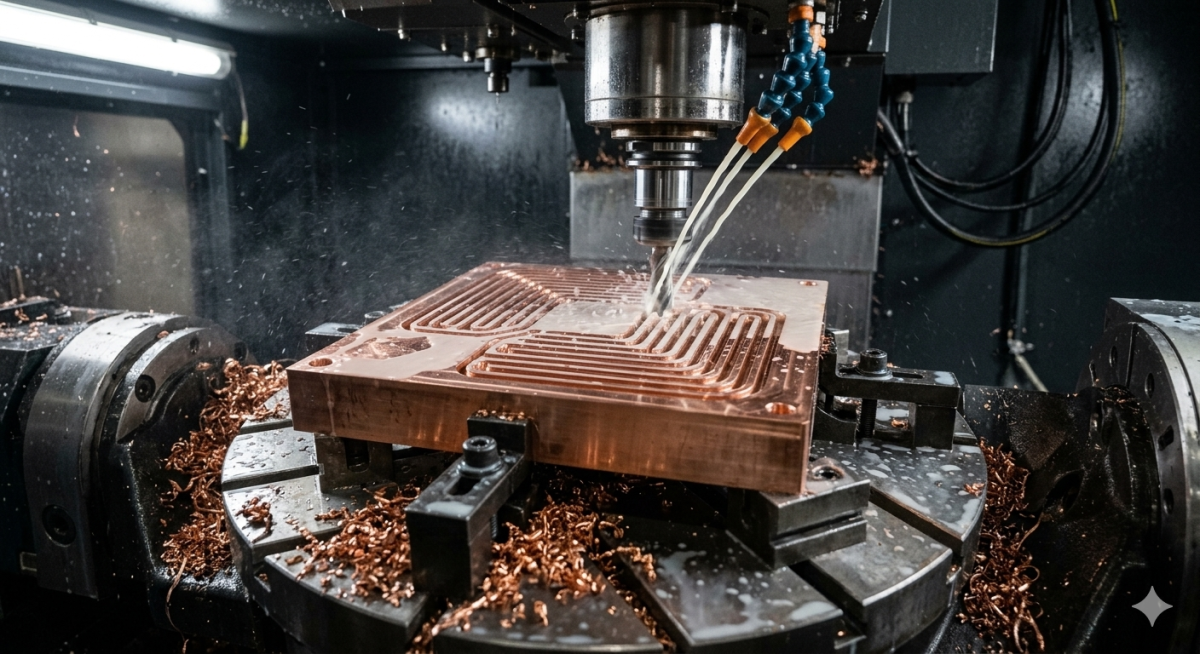
Cold plates, typically machined from oxygen-free copper or high-grade aluminum, require complex internal micro-channel geometries to maximize surface area and fluid turbulence.
- Mating Surface Flatness: The surface interfacing with the thermal interface material (TIM) and the processor must maintain extreme flatness—often held to within 0.01mm to 0.025mm. Any deviation creates microscopic air pockets, acting as thermal insulators and defeating the purpose of liquid cooling.
- Channel Geometry: Channel width, depth, fin thickness, and transition geometry influence pressure drop, flow distribution, and heat transfer. A tolerance such as ±0.05 mm may apply to certain features, but the correct limit must come from the approved design and manufacturing-capability review.
2. Leakage Risks: Zero Room for Error
A leak in a data center is the ultimate nightmare. Mitigating leakage risks begins directly on the CNC table.
- O-Ring Groove Precision: Groove dimensions, surface condition, flatness, edge condition, and assembly parameters can affect sealing. Acceptance should be based on the approved groove design, measurable drawing requirements, inspection, and sealing validation—not a subjective requirement for a flawless appearance.
- Thread Milling vs. Tapping: For inlet and outlet ports (like G1/4 threads), thread milling is vastly superior to traditional tapping. It provides cleaner threads with better concentricity, ensuring a perfect seal when the specialized liquid cooling fittings are torqued down.
3. Surface Finish: It Actually Matters for Thermal Dynamics
Surface finish in cold plate manufacturing isn't an aesthetic choice; it’s a functional requirement dictated by fluid dynamics and thermodynamics.
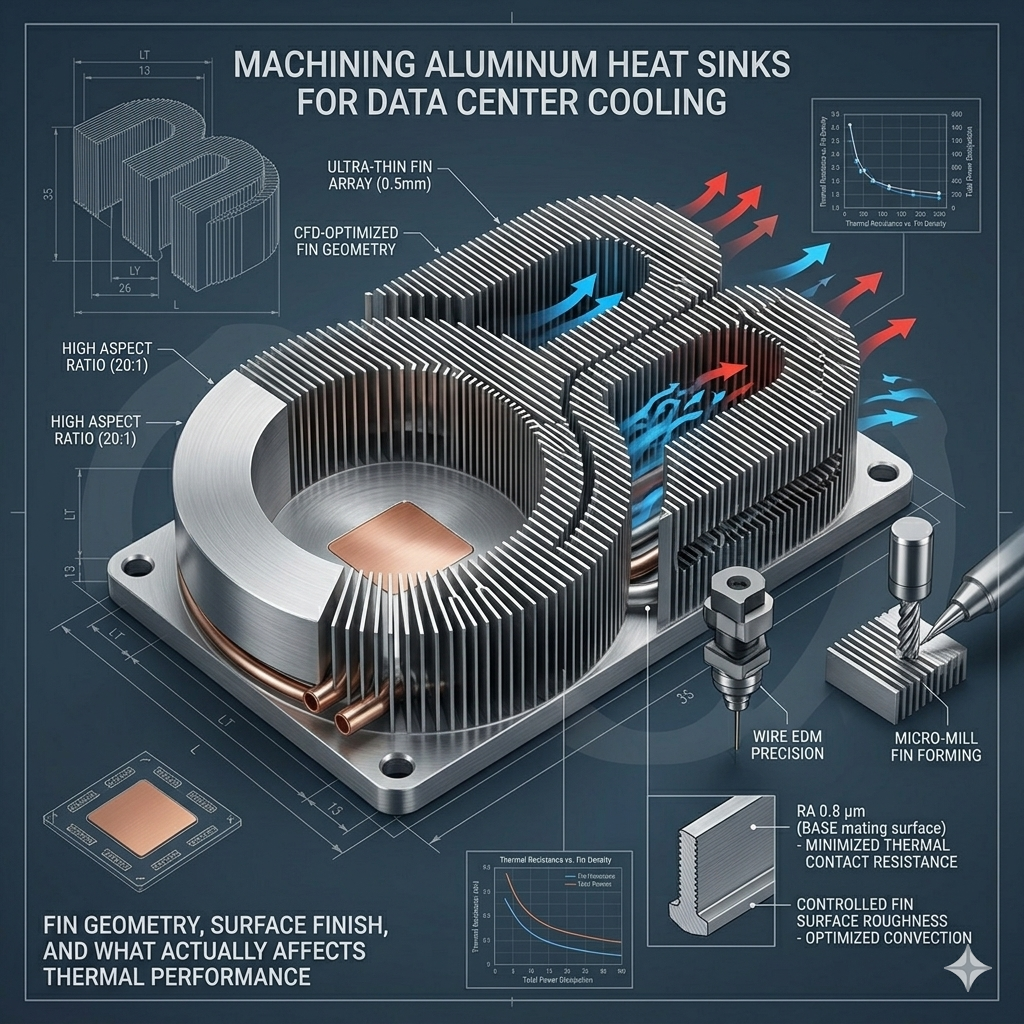
- Internal Channel Finish: Surface roughness and channel geometry can influence friction and flow behaviour. A value such as Ra 0.8 µm may be appropriate for some features, but it is not universal. The thermal and fluid design should define the necessary surface requirement and how it will be measured.
- The Mating Plate Finish: The surface touching the chip requires an even finer finish, often achieved through secondary lapping processes, to ensure the thermal paste or liquid metal spreads in an ultra-thin, perfectly even layer.
Cold-plate machining can require careful management of workholding, material removal, chip evacuation, distortion, sealing features, burrs, cleanliness, and inspection. Suitable equipment may include 3-axis or multi-axis machining depending on geometry. Buyers should require objective evidence of dimensional stability and an agreed inspection and leak-validation plan rather than a general performance guarantee.