Machining Aluminum Heat Sinks for Data Center Cooling: Fin Geometry, Surface Finish, and What Actually Affects Thermal Performance
As high-density computing, AI servers, and edge data centers continue to scale, thermal management has become one of the most critical bottlenecks in hardware engineering. While liquid cooling is gaining traction, air-cooled aluminum heat sinks remain the backbone of data center thermal dissipation due to their reliability, cost-effectiveness, and lack of leakage risks.
However, designing a heat sink on CAD is very different from successfully producing it on the shop floor. The thermal performance of an aluminum heat sink is deeply tied to how it is manufactured. For custom or low-to-medium volume high-performance applications, precision CNC machining is often the required method.
Here is a closer look at how machining parameters—specifically fin geometry and surface finish—dictate the real-world thermal efficiency of data center heat sinks.
1. Pushing the Limits of Fin Geometry and Aspect Ratios
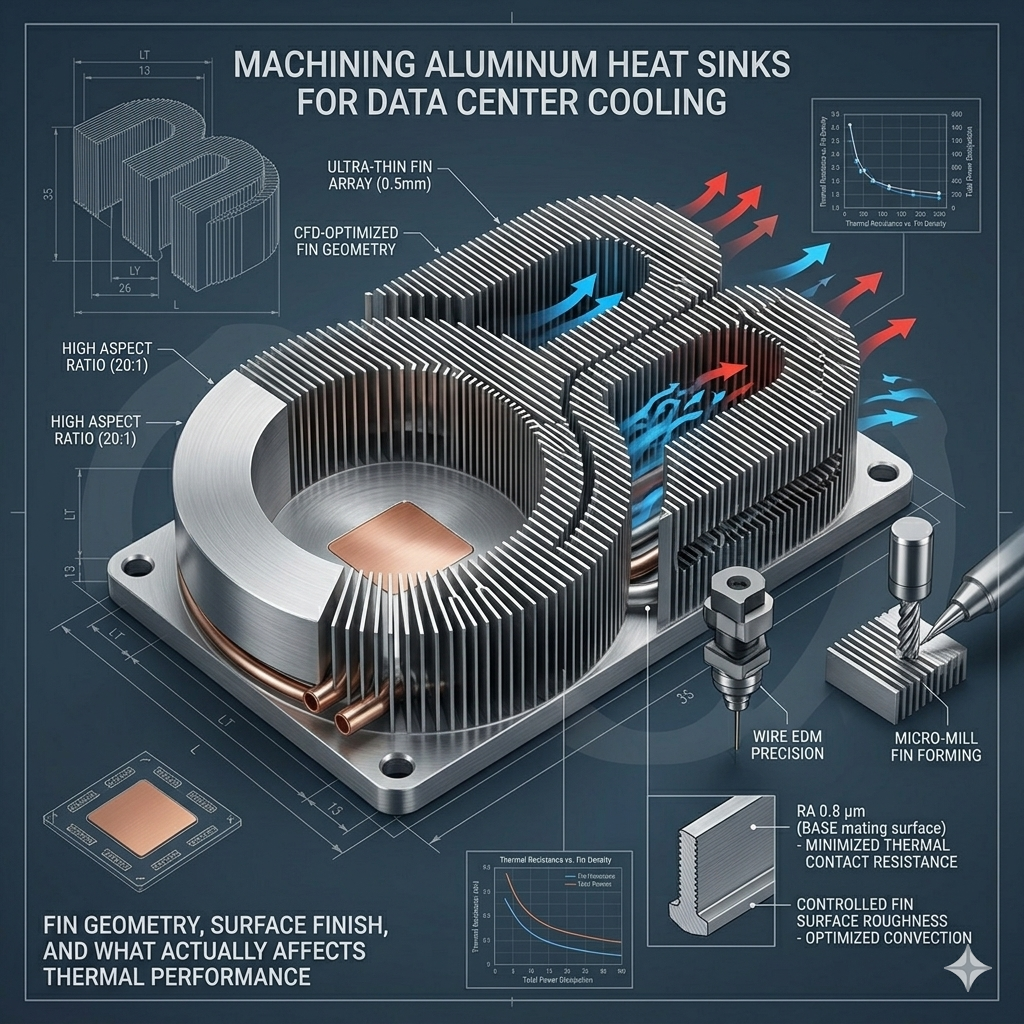
The fundamental principle of an air-cooled heat sink is maximizing surface area within a given volume. This drives engineers to design heat sinks with taller, thinner fins packed closely together.
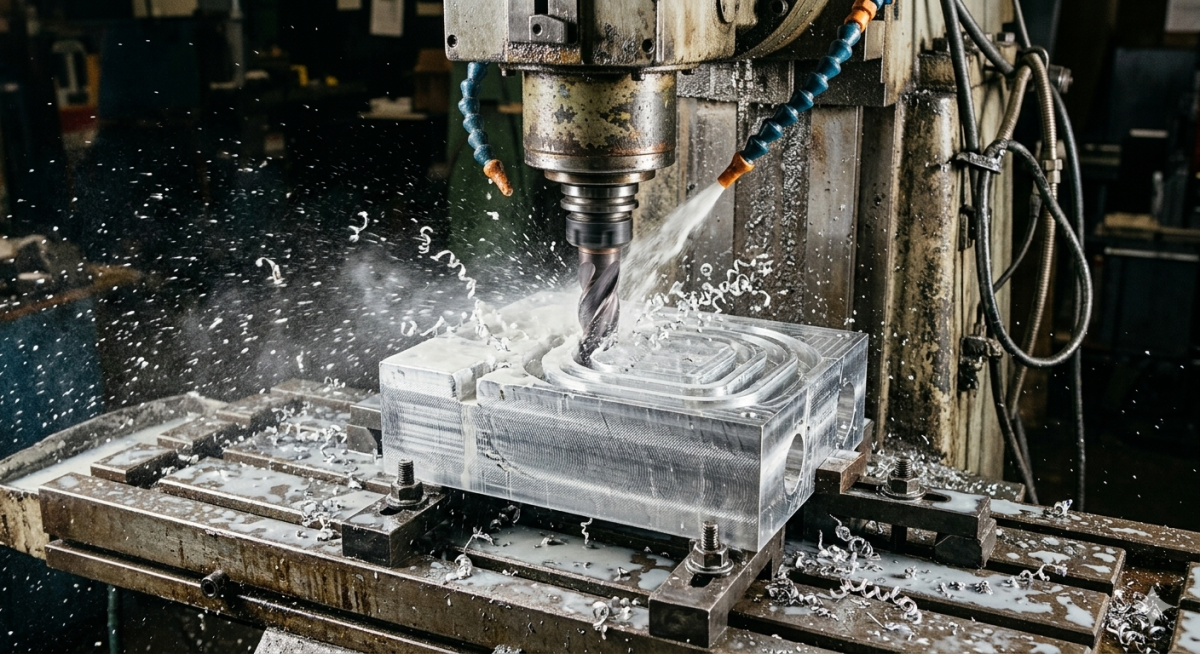
From a machining perspective, this creates significant challenges. High aspect ratios (the ratio of fin height to fin thickness) require deep pocketing and thin-wall machining strategies.
- Vibration and Chatter: As an end mill reaches deep between thin fins, tool deflection and harmonic chatter become major risks. Chatter not only ruins the surface finish but can cause dimensional inaccuracies or even snap the fin.
- Thin-Wall Machining Strategies: Successfully milling fins that are only a millimeter or two thick requires highly rigid machine setups, specialized tooling, and adaptive toolpaths. Climb milling and step-down strategies must be carefully programmed to relieve material stress gradually, preventing the thin aluminum walls from bowing or warping out of tolerance.
Achieving these tight tolerances on thin-wall aluminum enclosures and heat sinks ensures that the aerodynamic flow of the cooling fans behaves exactly as predicted in CFD (Computational Fluid Dynamics) simulations.
2. The Crucial Role of Surface Finish on Thermal Resistance
While fin geometry dictates how well heat dissipates into the air, surface finish dictates how effectively heat enters the sink in the first place.
The heat-sink base and thermal interface must meet the flatness, surface, assembly, and contact requirements defined by the thermal design. A Thermal Interface Material (TIM) is commonly used between the heat source and heat sink to accommodate microscopic surface variation and support heat transfer.
- Effect of Roughness: Excessive roughness or unsuitable surface form can reduce effective contact and affect the thermal interface. Its actual impact depends on flatness, waviness, TIM type and thickness, mounting pressure, material, and operating conditions.
- Optimizing the Mating Surface: A suitable finishing process should target the flatness and surface requirement established by the thermal and mechanical design. A roughness value such as Ra 0.8 µm may be specified in some applications, but it is not universally required, and a particular cutter or machine setup does not guarantee the result.
- Fin Surface Finish: Interestingly, the surface finish between the fins also matters, though for a different reason. A highly polished fin might actually perform slightly worse than a matte finish when it comes to radiant heat transfer, but in forced-air data center environments, consistent, burr-free surfaces are primarily needed to prevent turbulent airflow and pressure drops.
3. Material Selection: Machinability vs. Thermal Conductivity
Aluminum 6061-T6 is the industry standard for CNC machined components, offering an excellent balance of strength, weldability, and machinability. Its thermal conductivity sits at roughly 167 W/m·K.
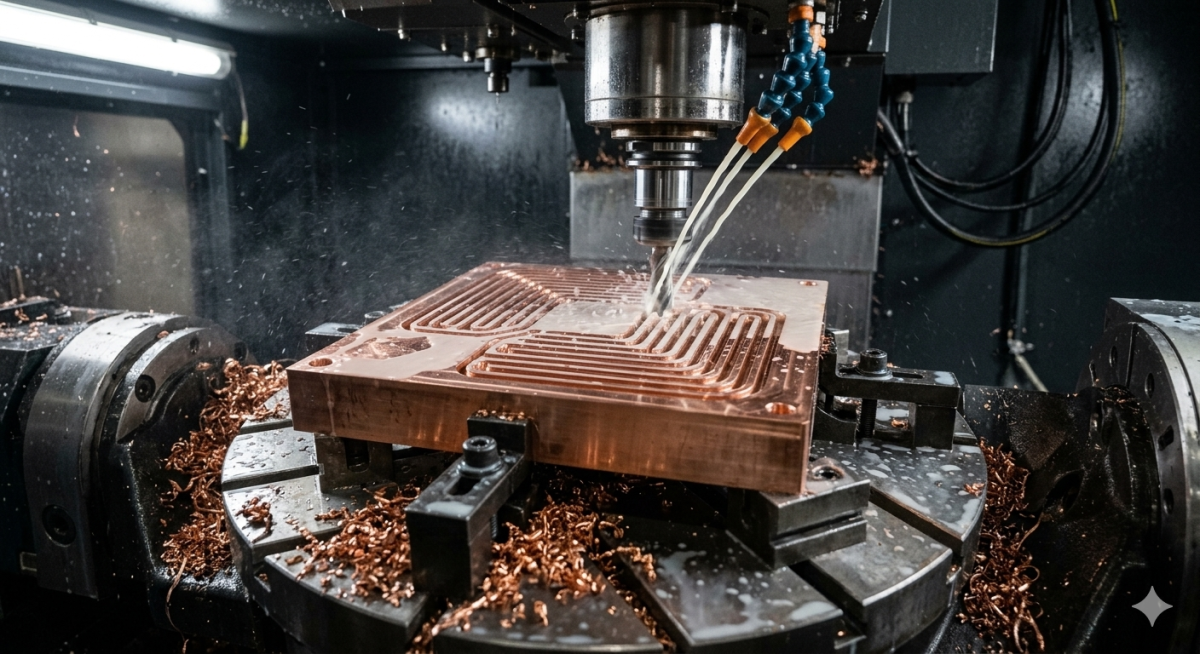
However, in extreme data center applications, engineers sometimes specify Aluminum 1050 or 1100. These commercially pure grades offer much higher thermal conductivity (up to 230 W/m·K). The trade-off? They are incredibly soft and "gummy" to machine. Machining pure aluminum heat sinks without chip welding (where the material melts and sticks to the cutting tool) requires high-pressure coolant, very sharp polished flutes, and optimized spindle speeds.
The Origin Basis Approach to Thermal Hardware
Theoretical thermal performance means nothing if the component cannot be reliably manufactured. Whether it is minimizing tool deflection on densely packed fins or achieving the perfect surface flatness for optimal TIM spread, the machining process is a critical variable in data center cooling.
When sourcing custom heat sinks, evaluate the supplier’s ability to control fin geometry, thin-wall distortion, base flatness, surface condition, burrs, cleanliness, inspection, and revision requirements. Final thermal performance should be confirmed through the product owner’s approved analysis and testing.