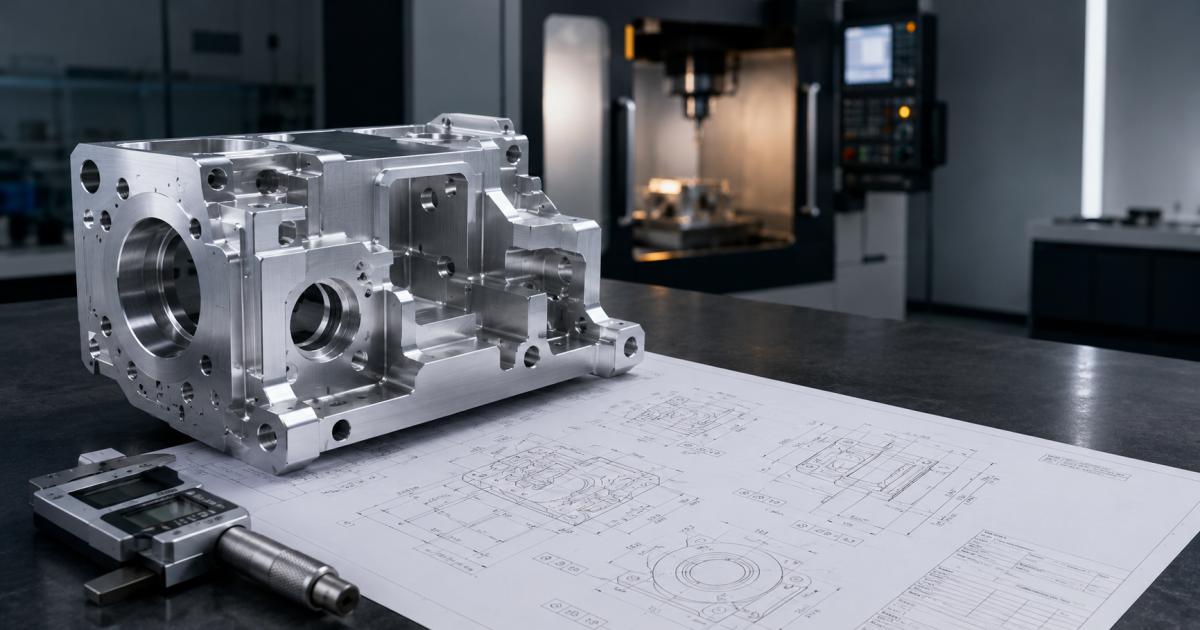
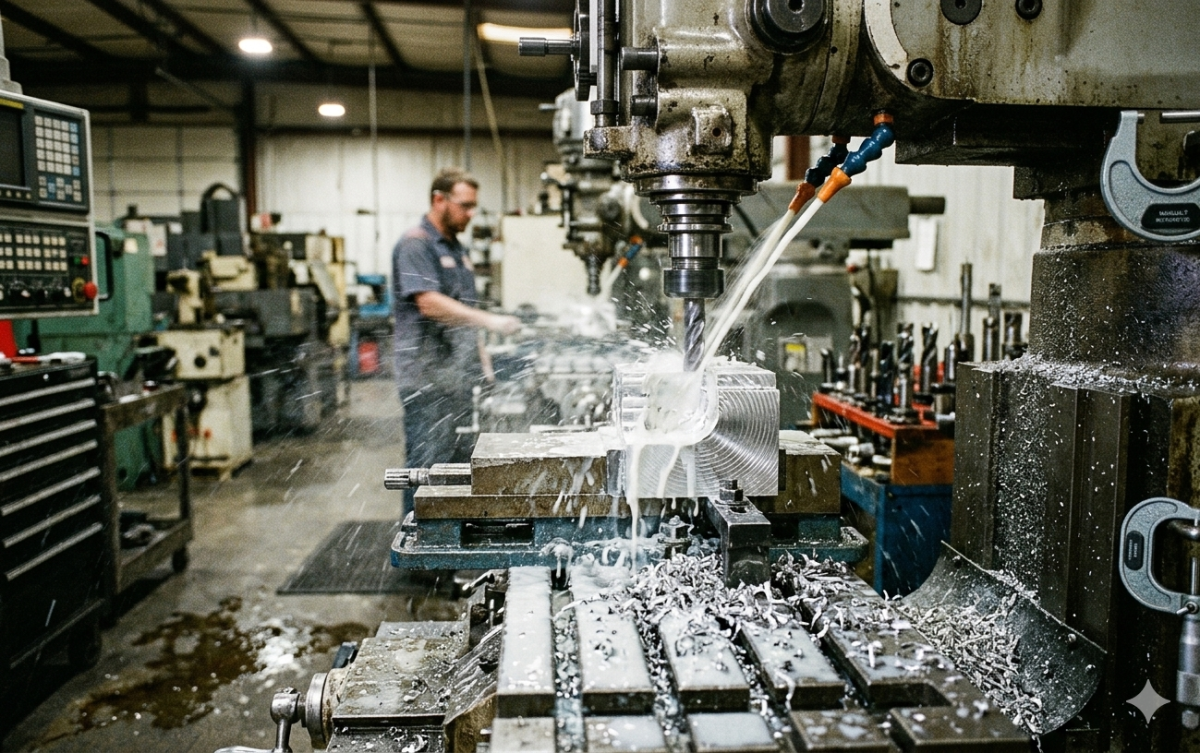
Verifying Precision CNC Machining Capability in Delhi NCR
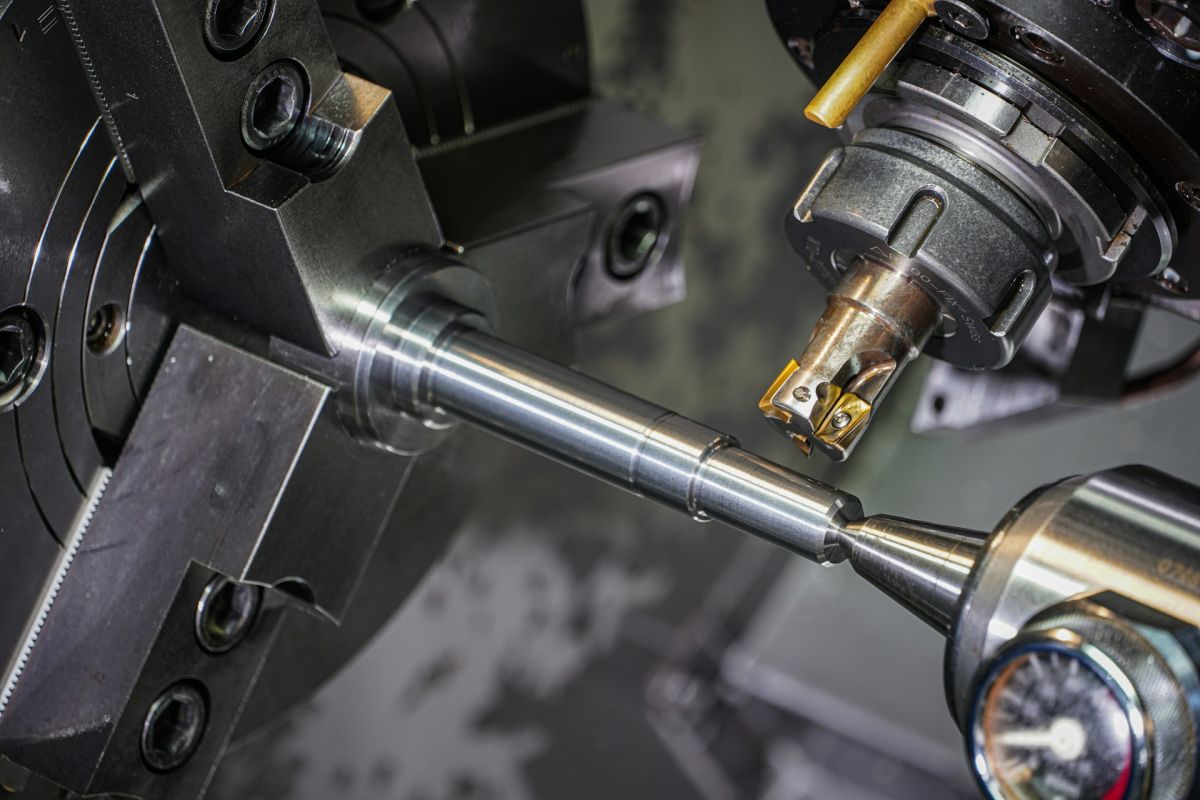
Delhi NCR has a large and diverse manufacturing base, ranging from general-purpose job shops to specialized engineering suppliers. For buyers of precision-machined components, the challenge is not deciding whether the region has capability. The challenge is verifying which supplier, process, equipment, quality controls, and documentation are suitable for a particular drawing.
A professional supplier qualification should rely on objective evidence rather than assumptions about company size, location, machine brand, or marketing language.
1. Start With the Drawing and Functional Requirements
Terms such as “high precision,” “aerospace quality,” or “medical grade” do not define an acceptance criterion. The supplier should review the controlled drawing, 3D model, revision, material, quantity, special processes, inspection requirements, and end-use considerations before committing to the work.
If a feature requires a tolerance such as ±0.005 mm, ask whether that tolerance applies to size, position, form, or another characteristic. Capability depends on geometry, material, datum structure, workholding, machine condition, tooling, thermal effects, and measurement uncertainty. A general shop-wide tolerance claim is not meaningful evidence.
2. Match Machine Configuration to the Component
Axis count alone does not determine quality. Many components can be produced effectively on a rigid 3-axis machine with qualified fixtures, while other geometries benefit from 4-axis or 5-axis access. Ask the supplier to explain the proposed number of setups, datum-transfer strategy, probing, tool reach, workholding, and how relationships between critical features will be verified.
Also confirm the machine’s work envelope, spindle capability, tool capacity, condition, maintenance controls, and suitability for the specified material. A newer or higher-axis machine does not remove the need for a stable process.
3. Verify Measurement Capability
The inspection method must suit the characteristic being measured. Depending on the component, suitable equipment may include calibrated micrometers, bore gauges, height gauges, surface-roughness testers, optical equipment, or a Coordinate Measuring Machine (CMM). A CMM is valuable for many geometric relationships, but it is not automatically the best instrument for every feature.
Ask how measurement uncertainty, calibration status, fixturing, sampling, environmental conditions, and inspection records will be controlled. Temperature management should be proportionate to the tolerance and material. A fixed 20°C room is not a universal requirement for every precision component, although temperature compensation or controlled inspection conditions may be important for demanding work.
4. Check the Quality System and Certification Scope
ISO 9001, AS9100, ISO 13485, IATF 16949, and other certifications address different industries and scopes. Where certification is contractually required, verify the certificate’s issuing body, validity, site address, standard, exclusions, and scope. Certification supports confidence in a quality-management system, but it does not replace component-specific capability review.
For an uncertified or newly commissioned supplier, buyers may require additional audits, sample work, source inspection, limited initial quantities, or approval milestones. A supplier should state its certification status accurately and never represent a future target as a current credential.
5. Define Traceability and Documentation Before Ordering
Requirements may include material certificates, heat or lot traceability, approved outside-process certificates, revision-controlled work instructions, First Article Inspection, dimensional reports, certificates of conformity, nonconformance records, or retained inspection data. Define these deliverables during quotation so they are included in the process and price.
6. Evaluate the Path From Prototype to Repeat Production
A successful prototype does not automatically prove readiness for higher quantities. Review fixture strategy, tooling life, inspection frequency, process validation, material supply, outside processes, packaging, capacity, maintenance, change control, and contingency planning before scaling.
Questions to Ask a Prospective CNC Supplier
- Which machines and setups are proposed for this part?
- Which features present the greatest manufacturing or inspection risk?
- How will datums and critical geometric relationships be controlled?
- Which measuring instruments will verify each critical characteristic?
- What material, inspection, traceability, and special-process records are included?
- Which certifications are current and applicable to this site and scope?
- Which activities will be subcontracted, and how are those providers controlled?
- What evidence supports the proposed tolerance, capacity, and delivery commitments?
Origin Basis Current Status
Origin Basis is establishing a precision CNC machining facility in Greater Noida for a planned April 2027 production opening, subject to commissioning and operational readiness. The founder brings more than 15 years of CNC machining and programming experience across Canada and India, including aerospace-sector experience. That founder background does not represent current Origin Basis production history.
The planned in-house scope includes 3-axis and 4-axis CNC machining. Origin Basis is not currently AS9100, ISO 13485, or ISO 9001 certified. Future enquiries will require drawing review and confirmation of equipment suitability, achievable tolerances, inspection capability, quality requirements, capacity, and delivery before a manufacturing commitment is made.
The Bottom Line
Reliable precision CNC sourcing in Delhi NCR should be an evidence-based qualification exercise. Buyers who define requirements clearly and verify capability, inspection, traceability, certification, and process control are better positioned to choose a suitable supplier—whether that supplier is a small specialist or a larger contract manufacturer.
Submit an advance enquiry to Origin Basis if you would like to discuss a future requirement. Preliminary review is available before launch; formal acceptance and scheduling will follow commissioning and technical validation.