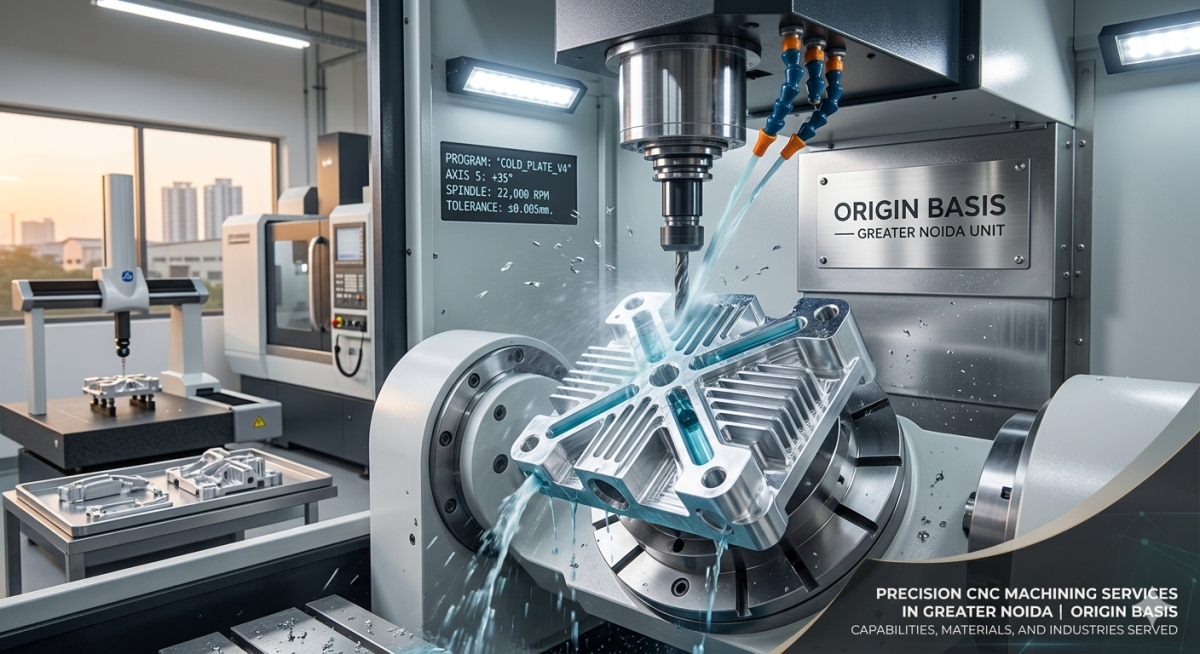
Build-to-Print & Built-to-Specification CNC Machining in Greater Noida
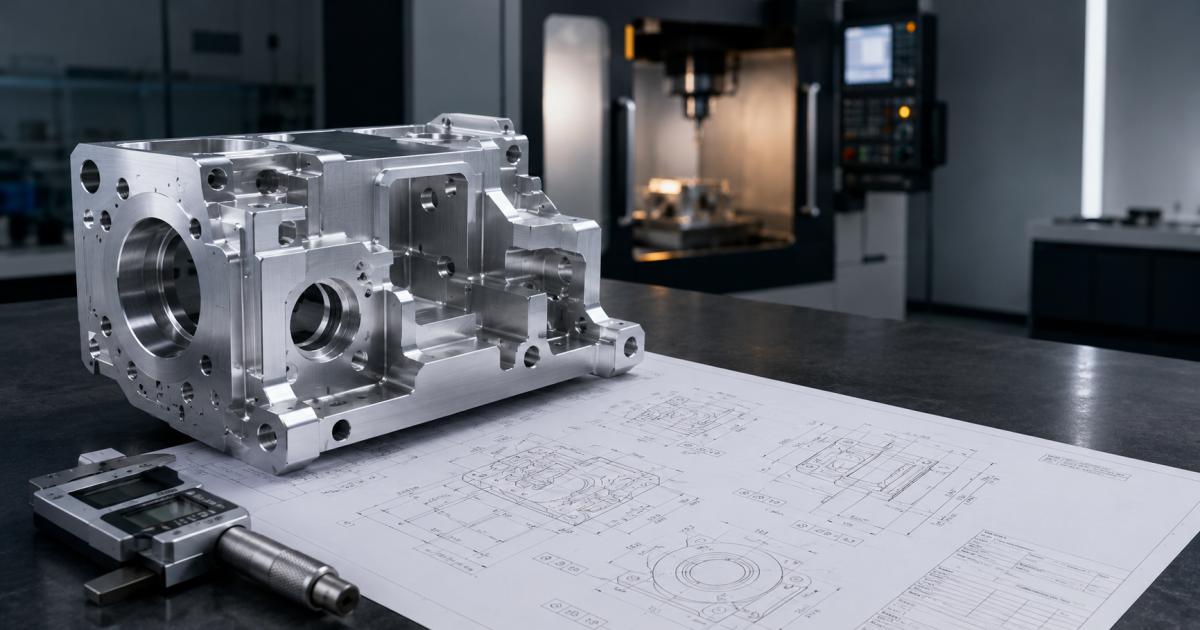
Build-to-Print & Built-to-Specification CNC Machining
When an engineering team sends a drawing to a machine shop, it is not simply asking for “a similar part.” It is transferring a controlled set of requirements: dimensions, tolerances, material, surface finish, threads, geometric controls, inspection needs and, where applicable, traceability or special-process requirements.
That is the foundation of build-to-print CNC machining.
For OEMs, product developers and procurement teams, understanding the difference between build-to-print and built-to-specification is important. The two terms are related, but they do not always assign the same level of design responsibility to the manufacturer.
ORIGINBASIS is establishing precision CNC machining operations in Greater Noida, NCR, with production planned to begin in April 2027, subject to commissioning and operational readiness. We are accepting advance RFQs for potential custom components, prototypes, and repeat-production work. Our planned approach begins with one principle: the approved technical requirements must control the job from quotation through final verification.
What Does Build-to-Print Mean in CNC Machining?
Build-to-print means the customer supplies the released design definition and the manufacturer produces the component according to it. The controlling package may include:
- a 2D engineering drawing;
- a 3D CAD model;
- material grade and condition;
- dimensional and geometric tolerances;
- thread, edge-break and surface-finish requirements;
- heat treatment, coating, plating or other special processes;
- inspection, certification and traceability requirements;
- revision level, quantity and delivery schedule.
In a true build-to-print project, the customer normally retains design authority. The CNC manufacturer is responsible for planning and controlling the manufacturing process, but it must not silently alter the design.
If a radius cannot be reached with a practical cutting tool, a tolerance conflicts with another requirement, or the drawing and CAD model do not agree, the correct action is to raise the issue before production. Any accepted change should be documented and approved by the authorized customer contact.
This protects both parties. The customer’s design intent remains intact, while the manufacturer works from a clear, controlled baseline.
What Does Built-to-Specification Mean?
“Built to specification” is sometimes used casually to mean “made exactly to the customer’s requirements.” In formal sourcing, however, build-to-specification can involve broader supplier responsibility.
The customer may define the required function, interfaces, performance, operating environment and acceptance criteria without providing every manufacturing detail. The supplier may then help develop the design, select an appropriate material or process, and translate the functional requirement into a manufacturable solution.
For example, a customer may specify that a fixture must locate a component within a defined repeatability, resist a stated load and fit within a fixed machine envelope. Under a built-to-specification arrangement, the supplier may develop the fixture concept and detailed design subject to the agreed approval process.
The most important step is not choosing the label. It is documenting the boundary of responsibility:
- Who owns the final design?
- Which document controls if the drawing and CAD model conflict?
- Who may approve a deviation?
- What defines acceptance?
- What inspection records or certificates are required?
Clarifying these points during the RFQ stage prevents assumptions from becoming production problems.
Some projects combine both models. A customer may provide a complete build-to-print component drawing but ask the supplier to design the workholding, soft jaws, gauges or manufacturing method needed to produce it reliably.
How ORIGINBASIS Plans to Handle a Precision CNC Machining RFQ
The following workflow describes the process Origin Basis plans to implement after facility commissioning. Actual scope and controls will be confirmed for each enquiry.
1. Technical package and revision review
Under the planned workflow, technical review begins by identifying the controlling files, part number, and revision. The drawing, model, purchase-order notes, and referenced specifications would be reviewed together rather than treated as unrelated attachments.
Where information is missing or conflicting, we prepare questions before committing to the job. This may include clarification of unspecified tolerances, material condition, deburring requirements, critical characteristics or the scope of inspection documentation.
2. Manufacturability review
The component is evaluated for machine access, cutting-tool reach, feature relationships, workholding, number of setups and inspection access. Depending on its geometry, the manufacturing plan may use 3-axis CNC milling, 4-axis machining, CNC turning or a combination of processes.
Design for manufacturability feedback is offered when it can reduce risk, lead time or cost. On build-to-print work, a DFM suggestion is not an unauthorized design change. Production proceeds only from the approved requirement.
3. Quotation and scope definition
A useful CNC quotation should do more than provide a unit price. The scope should identify quantity, material responsibility, included operations, inspection level, documentation, special processes, delivery assumptions and any non-recurring tooling or fixture cost.
Clear scope makes quotations easier to compare and reduces disputes after the order is placed.
4. Process planning and CNC programming
After formal order review, the planned process would convert approved technical requirements into a controlled manufacturing route. This may include operation sequence, datum strategy, workholding, cutting tools, CNC programming, in-process checks, and final inspection requirements.
The aim is not merely to make one acceptable component. The process should be stable enough to reproduce the required result across the agreed batch.
5. First-piece and in-process verification
Critical dimensions and feature relationships are checked at appropriate stages of production. Detecting variation early helps prevent additional machining from being performed on a nonconforming part and reduces the risk of repeating the same issue across a batch.
The inspection method should suit the feature and tolerance. The required report format—such as a dimensional inspection report, certificate of conformity or material documentation—should be agreed during quotation rather than assumed after production.
6. Final inspection and release
Under the planned release process, the completed component would be checked against the applicable drawing revision, purchase-order requirements, and agreed acceptance plan. Required documents would be assembled with the order, and any approved deviation would remain linked to the job record.
This closed-loop approach helps preserve design intent from RFQ to delivery.
What Should You Include in a CNC Machining RFQ?
Providing a complete RFQ package improves quotation accuracy and shortens technical review time. Whenever applicable, include:
- 2D drawing in PDF format;
- 3D model in STEP or another agreed neutral format;
- part number and current revision;
- required quantity and expected repeat demand;
- material specification, grade and condition;
- required heat treatment, coating or plating;
- critical dimensions and functional interfaces;
- surface-finish and cosmetic requirements;
- inspection-report and traceability needs;
- target delivery date and delivery location;
- end-use or industry requirements relevant to manufacturing.
If the drawing is not yet production-ready, state that clearly. Origin Basis plans to separate DFM feedback from the released build-to-print requirement so proposed improvements can be reviewed without losing configuration control.
Why Work With a CNC Machining Partner in Greater Noida?
For customers across Noida, Greater Noida, Ghaziabad, Delhi NCR and nearby industrial centres, a local precision machining partner can make technical communication and project coordination more direct. Drawing questions, first-piece reviews and repeat-order planning can be handled with less distance between the engineering, procurement and manufacturing teams.
ORIGINBASIS combines this local accessibility with more than 15 years of hands-on CNC machining and programming experience across India and Canada. Every enquiry is approached from the viewpoint of how the part will be held, programmed, machined, measured and repeated—not simply whether a price can be placed against a drawing.
Our capabilities are being established for custom precision components, prototypes, New Product Introduction and repeat production for demanding industrial applications. Requirements and achievable tolerances are reviewed part by part because geometry, material, feature access, process sequence and inspection method all affect the correct manufacturing approach.
Start a Build-to-Print CNC Machining Discussion
If you are sourcing build-to-print CNC machining in Greater Noida, send ORIGINBASIS your drawing, 3D model, quantity, material, revision and inspection requirements for a technical review.
Production is planned to begin in April 2027, subject to successful commissioning and operational readiness. Advance RFQs are being accepted for early technical review; capacity and scheduling will be confirmed only after the required process has been validated.
Email: Quote@originbasis.com
Location: Greater Noida, NCR, India
Request a quote: Contact ORIGINBASIS
At ORIGINBASIS, we are where precision begins—with a clear requirement, a controlled process and a component verified against the agreed specification.
Frequently Asked Questions
What files are normally required for build-to-print CNC machining?
A 2D drawing should define tolerances, material, finish and other acceptance requirements, while a 3D model provides the nominal geometry used for programming. The applicable revision and purchase-order requirements should also be identified.
Can ORIGINBASIS suggest changes to a build-to-print component?
Origin Basis plans to provide DFM feedback when a feature may increase cost, manufacturing risk, or lead time. A suggestion would not replace the released design; any accepted change must follow the customer’s documented approval process.
Are prototypes and repeat production both supported?
ORIGINBASIS is establishing planned capability for prototypes, NPI, and repeat production. Process planning, tooling, inspection scope, pricing, capacity, and delivery would be matched to the required quantity and expected future demand after technical review.
How are tolerances handled during quotation?
Tolerances are reviewed in relation to the part’s material, geometry, datum structure, setup strategy and inspection method. Any conflict or requirement that needs clarification should be resolved before the order is accepted.
Do you accept advance RFQs before the facility opens?
Yes. ORIGINBASIS is accepting advance enquiries now, with production planned to begin in April 2027 subject to commissioning and operational readiness. Early review allows time to clarify technical requirements, while manufacturing acceptance, capacity, and scheduling will be confirmed later.